



Blog
The 10 Best Fragrances for Men: A Psychologist’s Guide & Scent Science Analysis

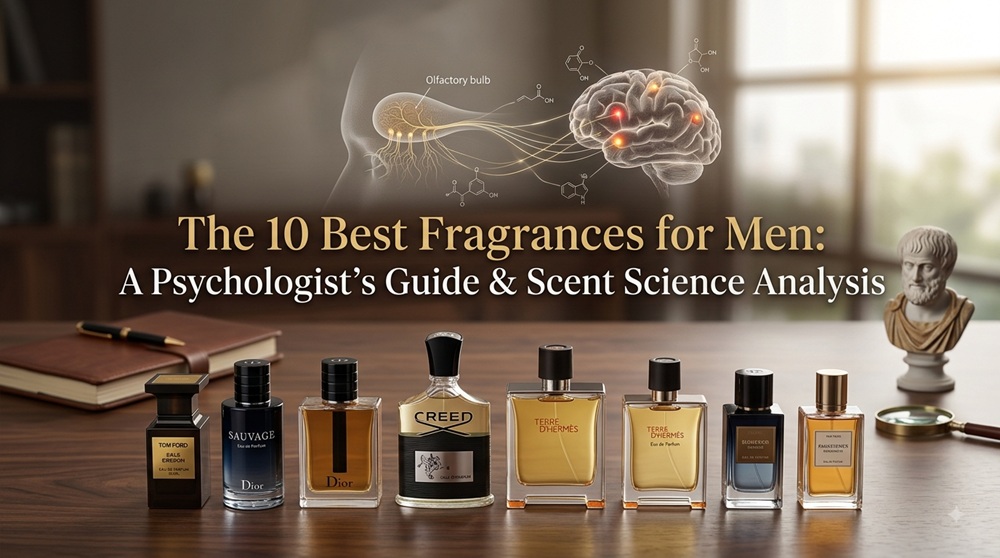
The sense of smell operates on a direct, unmediated neural highway to the brain’s limbic system—the emotional and memory center containing the amygdala and hippocampus. Unlike visual or auditory stimuli, which are processed through the thalamus first, olfactory stimuli trigger immediate, involuntary emotional and physiological responses.
Selecting a fragrance is far more than a routine grooming task; it is an active form of psychological signaling. Whether you aim to project executive authority, lower cortisol levels, or heighten interpersonal attraction, your choice of scent influences both your cognitive state and how others perceive you.
Table of Contents
Quick Reference: Fragrances & Psychological Impact
Detailed Psychological Analysis: Top 10 Men’s Fragrances
How Scent Science Shapes First Impressions
How To Use Fragrance To Amplify Your Personality
Conclusion
Frequently Asked Questions (FAQ)
Quick Reference: Fragrances & Psychological Impact
| Fragrance | Primary Scent Family | Dominant Notes | Key Psychological Benefit | Ideal Setting |
| Dior Sauvage | Spicy Citrus | Bergamot, Sichuan Pepper, Ambroxan | Executive Presence & Magnetism | Daily Wear, Negotiations |
| Creed Aventus | Fruity Chypre | Pineapple, Birch, Musk | Dominance, Success & Ambition | Boardrooms, High-Stakes Events |
| Tom Ford Oud Wood | Woody Oriental | Oud, Sandalwood, Vetiver | Mystique, Authority & Grounding | Formal Evenings, Intimate Settings |
| Acqua di Parma Colonia | Citrus Floral | Sicilian Citrus, Lavender, Rosemary | Mood Elevation & Cognitive Clarity | Warm Weather, Executive Casual |
| YSL La Nuit de l’Homme | Woody Spice | Cardamom, Lavender, Cedar | Sedation, Comfort & Intimacy | Dates, Night Out |
| Armani Acqua di Gio | Aquatic Fresh | Marine Notes, Bergamot, Cedar | Stress Reduction & Restorative Calm | Daytime, Office, Casual Wear |
| Versace Eros | Amber Woody | Mint, Green Apple, Tonka Bean | High Energy, Playfulness & Vitality | Social Gatherings, Nightlife |
| Prada Luna Rossa | Aromatic Green | Lavender, Bitter Orange, Spearmint | Focus, Mental Refreshment & Balance | Athletics, High-Stress Work |
| Terre d’Hermès | Mineral Woody | Grapefruit, Flint, Vetiver | Emotional Stability & Resilience | Business Travel, Leadership |
| Jo Malone Wood Sage & Sea Salt | Wood Marine | Sea Salt, Sage, Ambrette Seeds | Cortisol Reduction & Mindful Renewal | Weekends, Personal Relaxation |
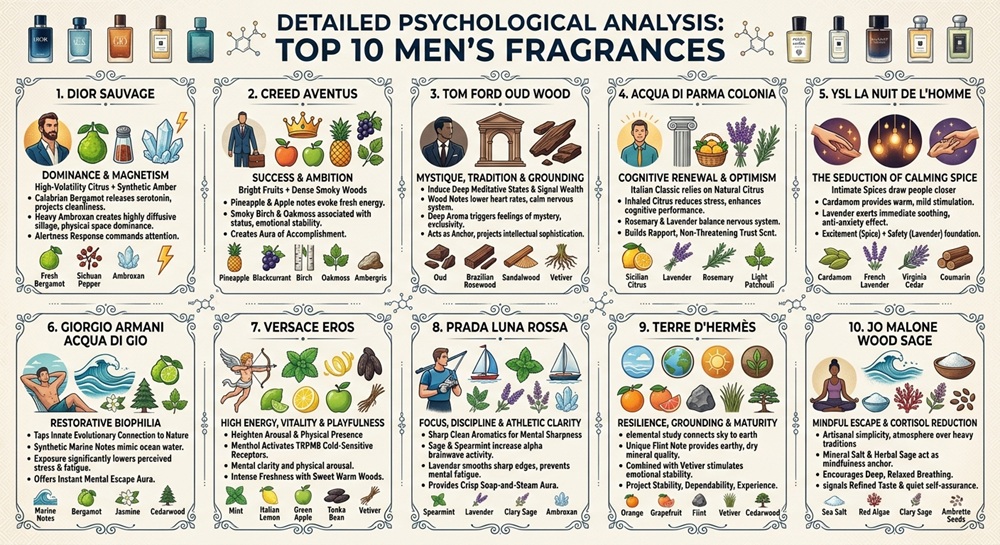
Detailed Psychological Analysis: Top 10 Men’s Fragrances
1. Dior Sauvage: The Psychology of Dominance and Magnetism
Dior Sauvage owes its massive commercial success to a carefully balanced interplay between high-volatility citrus top notes and persistent, synthetic amber accords.
- Olfactory Architecture: Fresh Bergamot, Sichuan Pepper, Ambroxan.
- Psychological Mechanism: The high concentration of Calabrian bergamot triggers an instant release of serotonin due to its natural limonene content, projecting cleanliness and alertness. The heavy Ambroxan (synthetic ambergris) base creates a lingering, highly diffusive sillage that projects physical space dominance.
Why It Stands Out: The contrast between bright citrus and sharp pepper creates an olfactory “alertness response” in observers, commanding attention while signaling vitality and confidence.
2. Creed Aventus: The Architecture of Success and Ambition
Creed Aventus is widely regarded in executive circles as the quintessential power scent. Its structure blends bright, optimistic fruits with dense, smoky woods.
- Olfactory Architecture: Pineapple, Blackcurrant, Birch, Oakmoss, Ambergris.
- Psychological Mechanism: The distinct opening pineapple and apple notes evoke a subconscious feeling of abundance and fresh energy. As it dries down, the smoky birch and oakmoss introduce dry, earthy nuances associated in behavioral studies with maturity, status, and emotional stability.
Why It Stands Out: Aventus creates a psychological aura of accomplishment. The bright fruit notes invite social interaction, while the dark wood foundation projects unyielding authority.
3. Tom Ford Oud Wood: Mystique, Tradition, and Grounding
Oud (derived from resinous Agarwood heartwood) has been utilized in cultural and spiritual rituals for millennia to induce deep meditative states and signal wealth.
- Olfactory Architecture: Agarwood (Oud), Brazilian Rosewood, Sandalwood, Vetiver.
- Psychological Mechanism: Rich in sesquiterpenes, wood notes like sandalwood and vetiver directly lower heart rates and calm autonomic nervous system activity. Oud’s deep, complex aroma triggers feelings of mystery, exclusivity, and psychological depth.
Why It Stands Out: Oud Wood acts as an anchor in high-pressure social environments. It projects quiet confidence and intellectual sophistication rather than loud volume.
4. Acqua di Parma Colonia: Cognitive Renewal and Timeless Optimism
First created in 1916, this Italian classic relies heavily on natural citrus oils to stimulate mental clarity and positive affect.
- Olfactory Architecture: Sicilian Citrus, Lavender, Rosemary, Verbena, Light Patchouli.
- Psychological Mechanism: Clinical aromatherapy studies confirm that inhaled citrus accords (specifically bergamot and lemon) reduce physiological stress markers and enhance cognitive performance. The addition of rosemary and lavender balances stimulation with nervous system regulation.
Why It Stands Out: It communicates clean, approachable refinement. It is psychologically non-threatening, making it the ideal scent for building rapport and trust in professional settings.
5. Yves Saint Laurent La Nuit de l’Homme: The Seduction of Calming Spice
Unlike aggressive, loud fragrances, La Nuit de l’Homme relies on warm, intimate spices that draw people closer into your personal space.
- Olfactory Architecture: Cardamom, French Lavender, Virginia Cedar, Coumarin.
- Psychological Mechanism: Cardamom contains high levels of cineole and terpinenyl acetate, which provide a warm, mildly stimulating olfactory sensation. Paired with linalool-rich lavender, it exerts an immediate soothing, anti-anxiety effect on nearby observers.
Why It Stands Out: It creates a contrast between excitement (spicy cardamom) and safety (relaxing lavender and warm cedar). This balance is the psychological foundation of interpersonal attraction.
6. Giorgio Armani Acqua di Gio: Restorative Biophilia in a Bottle
Humans have an innate evolutionary connection to natural environments—a concept known in psychology as Biophilia. Acqua di Gio taps directly into this instinct.
- Olfactory Architecture: Marine Notes, Bergamot, Jasmine, Cedarwood, Indonesian Patchouli.
- Psychological Mechanism: Synthetic marine notes (such as Calone) mimic the ozone and mineral qualities of ocean water. Research indicates that exposure to coastal sensory cues significantly lowers perceived stress and mental fatigue.
Why It Stands Out: It offers an instant mental escape. By evoking open marine landscapes, it projects a clean, refreshed, and effortless aura that feels universally welcoming.
7. Versace Eros: High Energy, Vitality, and Playful Confidence
Named after the Greek god of love, Versace Eros is explicitly designed to heighten arousal, energy, and physical presence.
- Olfactory Architecture: Mint Leaves, Italian Lemon Zest, Green Apple, Tonka Bean, Vetiver.
- Psychological Mechanism: Menthol in peppermint activates the TRPM8 cold-sensitive receptors in nasal passages, providing an immediate sensation of mental clarity and physical arousal. Sweet tonka bean (coumarin) provides a comforting, hedonically pleasing counterweight.
Why It Stands Out: The intense freshness of mint paired with sweet warm woods makes Eros high-impact and memorable. It signals high energy, sociability, and youthfulness.
8. Prada Luna Rossa: Focus, Discipline, and Athletic Clarity
Inspired by competitive sailing, Luna Rossa uses sharp, clean aromatics to promote mental sharpness and athletic focus.
- Olfactory Architecture: Spearmint, Lavender, Clary Sage, Ambroxan.
- Psychological Mechanism: Clary sage and spearmint increase alpha brainwave activity associated with relaxed alertness. Lavender smooths the sharp edges, preventing mental fatigue during long periods of concentration.
Why It Stands Out: It provides a crisp, modern “soap-and-steam” aura. It is ideal for high-stress corporate environments or physical endeavors where emotional composure is key.
9. Terre d’Hermès: Resilience, Grounding, and Maturity
Terre d’Hermès is an artistic study in elemental psychology: connecting the sky (citrus) to the earth (mineral woods).
- Olfactory Architecture: Orange, Grapefruit, Flint, Vetiver, Cedarwood.
- Psychological Mechanism: The unique flint note provides an earthy, dry mineral quality that, combined with vetiver, stimulates feelings of emotional stability and resilience. The bitter orange top note prevents the composition from feeling heavy.
Why It Stands Out: It smells mature, grounded, and intensely authentic. It is widely favored by senior leaders who want to project stability, dependability, and experience.
10. Jo Malone Wood Sage & Sea Salt: Mindful Escape and Cortisol Reduction
This artisanal cologne moves away from heavy perfume traditions, focusing instead on atmospheric, restorative simplicity.
- Olfactory Architecture: Sea Salt, Red Algae, Clary Sage, Ambrette Seeds.
- Psychological Mechanism: Free from heavy floral or synthetic musk notes, the combination of mineral salt and herbal sage acts as a mindfulness anchor, lowering heart rate variability and encouraging deep, relaxed breathing.
Why It Stands Out: It provides a subtle “skin scent” that doesn’t overpower others. It signals quiet self-assurance, personal wellness, and refined artistic taste.
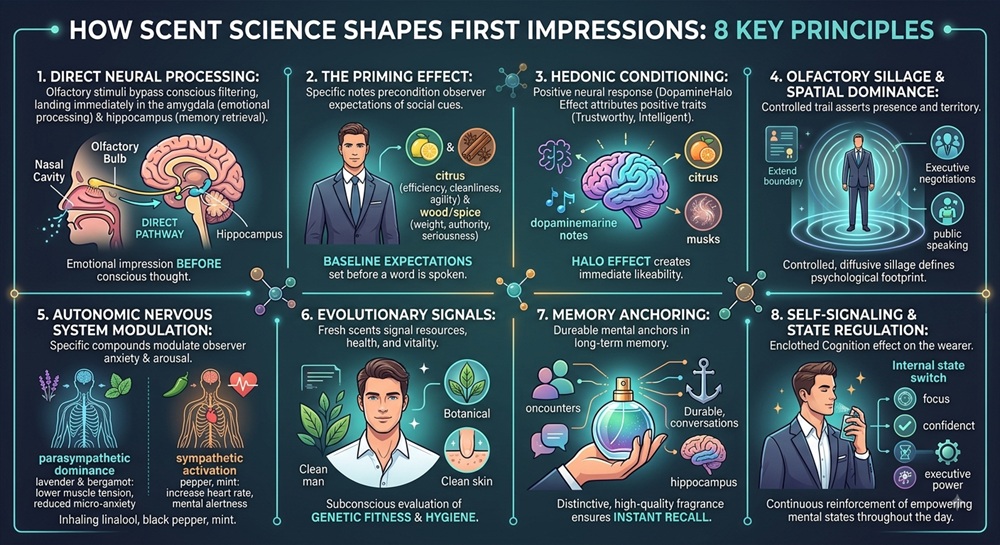
How Scent Science Shapes First Impressions
1. Direct Neural Processing via the Limbic System
Unlike visual or tactile input—which must pass through the thalamus for cognitive relay—olfactory stimuli travel directly from the nasal cavity to the olfactory bulb. From there, signals bypass conscious filtering and land immediately in the amygdala (emotional processing) and hippocampus (memory retrieval). Because of this direct neural architecture, a person registers an emotional impression of your fragrance before they consciously register your clothing or handshake.
2. The Priming Effect and Behavioral Expectations
Exposure to specific scent notes acts as a psychological “prime,” preconditioning how observers interpret subsequent social cues. For instance, an individual wearing a crisp citrus scent primes observers to expect efficiency, cleanliness, and agility. Conversely, resinous woods and spices prime observers to perceive weight, authority, and seriousness. Scent sets the baseline expectation before a word is even spoken.
3. Hedonic Conditioning and Immediate Likeability
The human brain classifies scents on a hedonic scale from high attraction to immediate aversion. Scents that feature clean, balanced accords (such as marine notes, light citrus, or soft musks) trigger micro-doses of dopamine in nearby observers. This positive neural response creates the Halo Effect: observers automatically attribute positive traits—such as trustworthiness, intelligence, and competence—to someone who smells pleasant.
4. Olfactory Sillage and Spatial Dominance
Sillage—the trail of fragrance left behind in the air—defines an individual’s psychological footprint in a room. High-diffusive notes like Ambroxan or heavy synthetic musks expand personal physical boundaries without physical contact. In high-stakes environments like executive negotiations or public speaking, a controlled, diffusive sillage asserts territorial confidence and physical presence before conversation begins.
5. Autonomic Nervous System Modulation in Observers
Specific aromatic compounds actively modulate the autonomic nervous system of those around you. For example, inhaling linalool (found in lavender and bergamot) triggers parasympathetic activity, reducing micro-anxiety and lowering muscle tension in observers. Conversely, sharp spicy notes like black pepper or mint activate sympathetic arousal, increasing heart rate and mental alertness in the room.
6. Evolutionary Signals of Health and Hygiene
From an evolutionary perspective, smell is the primary sense used to evaluate genetic fitness and hygiene. Fresh, aromatic scents signal access to resources, clean living habits, and high physical vitality. Synthetic or heavy accords that mimic clean skin and fresh botanicals trick the human subconscious into registering the wearer as energetic, healthy, and highly attractive.
7. Memory Anchoring and Long-Term Recall
Because olfactory memories are consolidated in the hippocampus alongside strong emotional experiences, scent forms the most durable mental anchor of any sensory input. An individual may forget your exact attire or specific conversational details, but a distinctive, high-quality fragrance anchors your identity into their long-term memory, ensuring instant recall during future encounters.
8. Self-Signaling and Internal State Regulation
The impact of scent science is not strictly external; it exerts a powerful enclothed cognition effect on the wearer. Applying an empowering scent acts as an internal state switch. When you associate a rich, structured cologne with focus, confidence, or executive power, smelling that fragrance on your own pulse points continuously reinforces those mental states throughout the day.
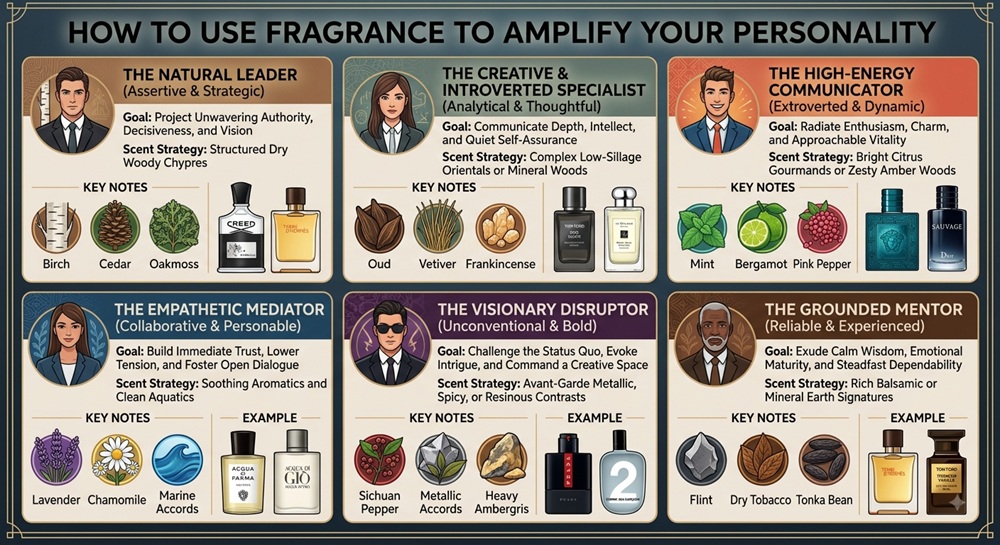
How To Use Fragrance To Amplify Your Personality
Understanding scent psychology allows you to select fragrances that strategically complement your natural personality traits or compensate for qualities you want to project:
- For the Natural Leader (Assertive & Strategic):
- Goal: Project unwavering authority, decisiveness, and vision.
- Scent Strategy: Lean into structured, dry woody chypres featuring birch, cedar, and oakmoss (e.g., Creed Aventus, Terre d’Hermès). These notes project emotional stability and strategic weight.
- For the Creative & Introverted Specialist (Analytical & Thoughtful):
- Goal: Communicate depth, intellect, and quiet self-assurance.
- Scent Strategy: Choose complex, low-sillage orientals or mineral woods featuring oud, vetiver, or frankincense (e.g., Tom Ford Oud Wood, Jo Malone Wood Sage & Sea Salt). These subtle, intriguing profiles invite closer inspection without overwhelming shared spaces.
- For the High-Energy Communicator (Extroverted & Dynamic):
- Goal: Radiate enthusiasm, charm, and approachable vitality.
- Scent Strategy: Opt for bright citrus gourmands or zesty amber woods containing mint, bergamot, and pink pepper (e.g., Versace Eros, Dior Sauvage). High-volatility top notes match your dynamic social rhythm.
- For the Empathetic Mediator (Collaborative & Personable):
- Goal: Build immediate trust, lower tension, and foster open dialogue.
- Scent Strategy: Select soothing aromatics and clean aquatics featuring lavender, chamomile, and fresh marine accords (e.g., Acqua di Parma Colonia, Acqua di Gio). These non-threatening, fresh profiles promote relaxation and rapport.
- For the Visionary Disruptor (Unconventional & Bold):
- Goal: Challenge the status quo, evoke intrigue, and command a creative space.
- Scent Strategy: Experiment with avant-garde metallic, spicy, or resinous contrasts featuring Sichuan pepper, metallic accords, black tea, and heavy ambergris (e.g., Prada Luna Rossa Black, Comme des Garçons 2). Unconventional notes provoke mental curiosity and signal a willingness to break traditional boundaries.
- For the Grounded Mentor (Reliable & Experienced):
- Goal: Exude calm wisdom, emotional maturity, and steadfast dependability.
- Scent Strategy: Look for rich balsamic or mineral earth signatures built around flint, dry tobacco, tonka bean, and rooty vetiver (e.g., Terre d’Hermès Parfum, Tom Ford Tobacco Vanille). Deep resinous bases signal resilience and steady guidance under pressure.
Conclusion
Fragrance is far more than an invisible accessory; it is a scientifically grounded tool of behavioral influence and self-regulation. By understanding how olfactory architecture interacts with the human limbic system, you can select scents that do more than smell pleasant—they can lower cortisol, elevate mood, project executive presence, and anchor unforgettable first impressions.
Whether you select the bold authority of Creed Aventus, the restorative calm of Acqua di Gio, or the enigmatic depth of Tom Ford Oud Wood, wear your signature scent with intentionality. Let your fragrance communicate your purpose before you even speak a word.
Frequently Asked Questions (FAQ)
1. How does scent affect mood on a neurological level?
When inhaled, volatile aromatic compounds bind to olfactory receptors, sending electrical impulses directly to the limbic system—specifically the amygdala and hippocampus. This bypasses conscious mental filtering, instantly modulating neurochemistry by triggering releases of serotonin, dopamine, or endorphins depending on the specific scent molecules.
2. Can wearing a specific cologne actually boost my confidence?
Yes. Through a psychological phenomenon known as enclothed cognition, associating a specific fragrance with success, strength, or attractiveness acts as a psychological prime. When you wear that fragrance, your brain triggers a self-fulfilling expectation of confidence, altering posture, vocal tone, and social engagement.
3. Which fragrance notes are best for reducing workplace stress?
Natural aromatic notes rich in linalool and limonene—such as lavender, bergamot, clary sage, and cedarwood—have been clinically demonstrated to reduce autonomic nervous system arousal, lower heart rate variability, and decrease cortisol levels during high-stress work tasks.
4. How many sprays of cologne should I apply for optimal psychological impact?
For most Eau de Parfum (EDP) concentrations, 2 to 4 sprays applied to warm pulse points (base of the neck, inner wrists) are sufficient. The goal is to create a subtle “scent bubble” within arm’s length (1–2 feet), allowing observers to discover your fragrance naturally rather than being overwhelmed by a loud sillage.
Unlock Your Signature Scent Strategy
Ready to elevate your daily routine with a scent profile tailored to your personal psychology and professional goals? Share your go-to fragrance or ask a question in the comments below to join the discussion!
