


Blog
How to Apply Perfume for Maximum Longevity & Projection: The Complete Guide

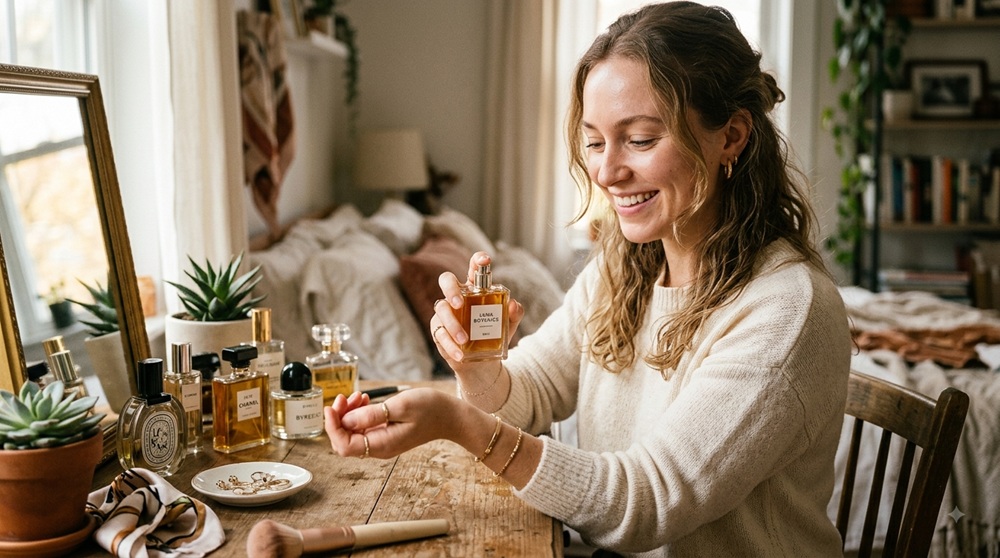
Apply ladies’ perfume to clean, well-moisturized skin immediately after showering, focusing on warm pulse points like the wrists, base of the neck, and inner elbows without rubbing the wrists together. Moisturizing skin with an unscented lotion or petroleum jelly provides a lipid base that traps fragrance molecules, extending wear time up to 50% longer while preserving the perfume’s true top, heart, and base notes.
Table of Contents
Choose the Right Fragrance Concentration
Fragrance Concentration Breakdown & Wear Times
Unlocking Scent Chemistry: 10 Hidden Culprits Sabotaging Your Fragrance Longevity
Prepare Your Canvas: Clean & Hydrated Skin
Focus Application on Strategic Pulse Points
Crucial Application Techniques & Mistakes to Avoid
Master the Art of Fragrance Layering
Preserve Perfume Quality: Correct Storage Protocols
Conclusion
Frequently Asked Questions (FAQ)
Quick Reference: Application Protocols at a Glance
| Application Step | Key Technique | Primary Benefit | Common Mistake to Avoid |
| Preparation | Apply to freshly washed, hydrated skin | Anchors fragrance molecules | Applying onto dry, unmoisturized skin |
| Target Zones | Spritz warm pulse points (neck, wrists, inner elbows) | Natural heat diffusion | Rubbing wrists together post-application |
| Dosage & Distance | Spray from 6–8 inches away (2–4 sprays total) | Prevents overpowering projection | Over-saturating clothes or jewelry |
| Layering | Pair with unscented lotion or matching body wash | Extends wear time up to 50% | Layering heavily scented, clashing lotions |
Choose the Right Fragrance Concentration
Before mastering application techniques, it is essential to understand that a perfume’s structural longevity is largely governed by its oil concentration.
Selecting the right concentration depends on your lifestyle needs:
- For All-Day Signature Wear: Choose an Eau de Parfum (EDP) like Chanel Coco Mademoiselle or Lancôme La Vie Est Belle. These formulas contain higher oil ratios, providing 8–10 hours of rich sillage.
- For Lighter Daytime Refreshment: Choose an Eau de Toilette (EDT) like Chanel Chance Eau Tendre. These offer bright, sparkling top notes with a softer, 4–6 hour wear time.
- For High-Impact Formal Evenings & Cold Weather: Opt for a Pure Parfum / Extrait de Parfum like Maison Francis Kurkdjian Baccarat Rouge 540 Extrait. With a 20–40% oil concentration, these intimate, rich formulas cling to skin for 12+ hours without overwhelming small spaces.
- For Active Lifestyles, Gym Sessions & Post-Workout Touch-Ups: Reach for an Eau de Cologne (EDC) or a dedicated Fragrance Mist. Carrying a 2–4% oil concentration, they offer a burst of refreshing citrus or light flora that lifts mood without becoming heavy or cloying when mixed with body heat and movement.
- For Sensitive Skin & High-Heat Outdoor Events: Look for Alcohol-Free / Water-Based Micro-Emulsion Perfumes. These specialized formulations deliver a steady 4–6 hour release without the quick-evaporating alcohol base that can dry out sensitive tissue or trigger sun-sensitivity under UV rays.
2. Fragrance Concentration Breakdown & Wear Times
When selecting a fragrance, the label on the bottle defines the concentration of pure aromatic oils dissolved in alcohol, directly dictating its longevity and projection.
| Fragrance Type | Perfume Oil Concentration | Average Longevity | Best Suited For |
| Pure Parfum / Extrait | 20% – 40% | 12+ Hours | Special occasions, formal evening events, and cold weather. |
| Eau de Parfum (EDP) | 15% – 20% | 6 – 10 Hours | All-day signature wear, office settings, and day-to-night transitions. |
| Eau de Toilette (EDT) | 5% – 15% | 3 – 6 Hours | Casual daytime wear, warm weather, and close-quarters spaces. |
| Eau de Cologne (EDC) | 2% – 4% | 1 – 2 Hours | Quick post-shower refreshes, workout bags, and subtle body sprays. |
Key Takeaways
- Pure Parfum (Extrait de Parfum): The highest concentration available. With minimal alcohol content, it clings gently to skin lipids, releasing rich base notes slowly over an entire day or night.
- Eau de Parfum (EDP): The luxury industry standard. EDPs offer the optimal middle ground between long-lasting performance and noticeable scent projection without requiring frequent reapplication.
- Eau de Toilette (EDT): Top-note heavy and fresh. EDTs provide a bright, immediate burst of scent that softens into a subtle skin aura after a few hours—perfect for hot weather.
- Eau de Cologne (EDC): Light and invigorating. EDCs are built around fleeting citrus, aquatic, or floral accords designed for instant refreshment rather than sustained wear.
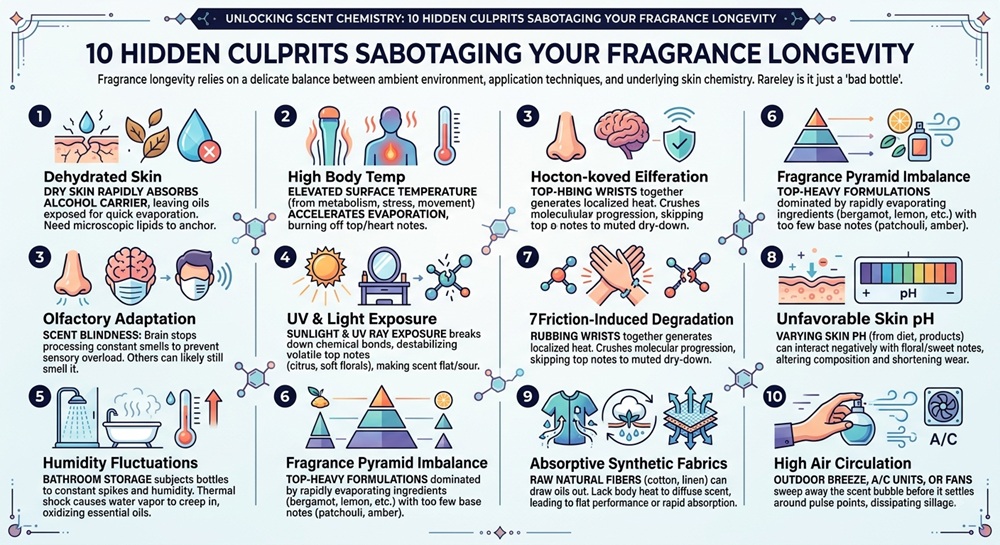
3. Unlocking Scent Chemistry: 10 Hidden Culprits Sabotaging Your Fragrance Longevity
If your perfume seems to vanish shortly after application, it is rarely just a “bad bottle.” Fragrance longevity relies on a delicate balance between ambient environment, physical application techniques, and underlying skin chemistry.
1. Dehydrated or Lipophobic Skin
Fragrance oil molecules need microscopic lipids (fatty acids) on the skin’s surface to bond and anchor themselves. If your skin is dry, it rapidly absorbs the alcohol carrier solution while leaving the remaining perfume oils exposed on top, causing them to evaporate prematurely.
2. High Internal Body Temperature
Your body acts as a continuous thermal engine. If you naturally have a high metabolic rate, are stressed, or are moving constantly, your elevated surface temperature accelerates the evaporation cycle—forcing delicate top and heart notes to burn off in half their expected time.
3. Olfactory Adaptation (Scent Blindness)
Often, your perfume hasn’t actually faded—your brain has simply stopped processing it. To prevent sensory overload, your olfactory system naturally filters out constant background smells after 15 to 30 minutes. While you can no longer smell your signature scent, people around you likely still can.
4. Over-Exposure to UV Rays and Ambient Light
Storing your bottles on a sunlit vanity exposes fragile perfume compounds to ultraviolet radiation. UV light breaks down chemical bonds, destabilizing volatile top notes (like citrus and soft florals) and turning an otherwise potent fragrance flat or sour.
5. Humidity Fluctuations in Storage
Keeping perfumes inside a bathroom subjects them to constant temperature spikes and high humidity from showers. Thermal shock causes water vapor to creep into bottles over time, oxidizing essential oils and destroying the bottle’s structural performance.
6. Fragrance Pyramid Imbalance (Top-Heavy Formulations)
Fragrances dominated by delicate, low-molecular-weight ingredients—such as bergamot, lemon, green tea, or marine accord molecules—are chemically built to evaporate rapidly. Without heavier anchor notes like patchouli, amber, vanilla, or sandalwood, even high-concentration scents will fade faster.
7. Friction-Induced Thermal Degradation
Rubbing your wrists together after spraying generates localized kinetic heat. This physical friction crushes the delicate molecular progression of the fragrance pyramid, snapping fragile top-note bonds and causing the scent to skip straight to a muted dry-down.
8. Unfavorable Skin pH Balance
Skin pH varies based on diet, hydration, and skincare products. Higher acidity levels on the skin surface can interact negatively with delicate floral and sweet notes, altering their chemical composition and shortening total wear time.
9. Absorptive Synthetic Fabrics
Spraying perfume onto raw natural fibers like cotton, linen, or untreated wool can draw moisture and oils out of the fragrance droplet. Unlike skin, synthetic fabrics lack body heat to gently diffuse the scent, leading to a flat performance or rapid absorption into inner clothing layers.
10. High Environmental Air Circulation
Working in outdoor breeze, near air conditioning units, or around high-powered fans sweeps away the evaporating scent bubble before it has a chance to settle around your pulse points, dissipating your personal sillage long before the base notes mature.
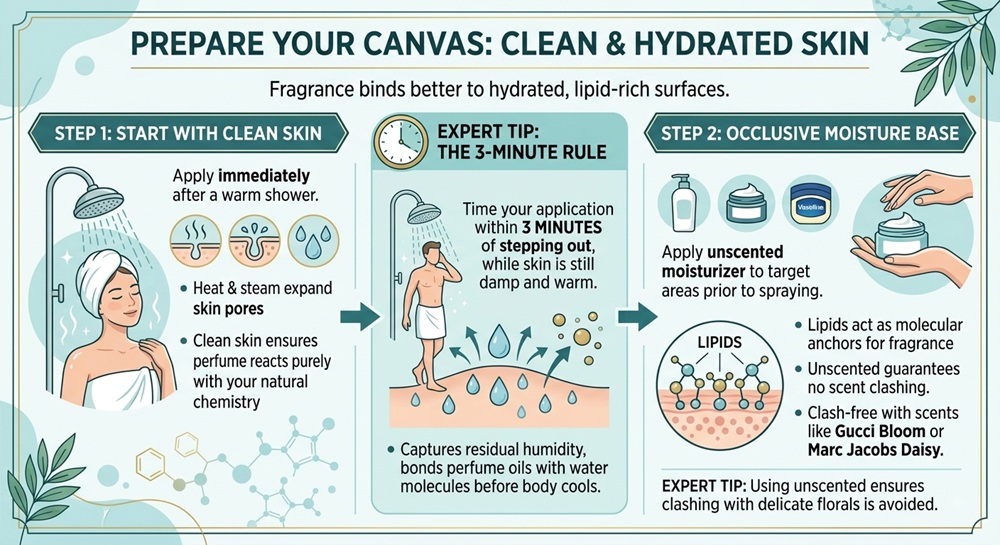
4. Prepare Your Canvas: Clean & Hydrated Skin
Fragrance binds significantly better to lipid-rich, hydrated surfaces than to dry tissue.
Step 1: Start with Clean Skin
Apply your fragrance immediately following a warm shower. The heat and steam expand your skin pores, while clean skin ensures the perfume oil reacts purely with your natural chemistry rather than residual oils, sweat, or environmental pollutants.
Expert Tip: Time your application within 3 minutes of stepping out of the shower while your skin is still damp and warm. This captures the residual humidity in your epidermis, allowing the perfume oils to bond with water molecules on the skin surface before your body temperature cools down.
Step 2: Occlusive Moisture Base
Lipids act as molecular anchors for fragrance compounds. Apply an unscented body lotion, rich body cream, or a thin layer of petroleum jelly to your target areas prior to spraying.
Expert Tip: Using an unscented moisturizer guarantees that your lotion’s synthetic notes will not clash with delicate florals like Gucci Bloom or Marc Jacobs Daisy.
5. Focus Application on Strategic Pulse Points
Pulse points are areas where arterial blood vessels run closest to the skin’s surface. The gentle, continuous heat generated by these warm zones acts as a natural diffuser, continuously radiating your fragrance throughout the day.
- Behind the Ears: A high-heat, protected pulse point ideal for intimate projection and subtle scent trails (sillage).
- Base of the Neck & Collarbone: Ensures immediate wafts during conversation and movement.
- Inner Wrists: The classic pulse zone. Allows the natural heat from your pulse to warm notes like Chanel No. 5.
- Inner Elbows & Behind Knees: Excellent secondary zones for warmer months; limb movement actively helps release top and heart notes as you move.
6. Crucial Application Techniques & Mistakes to Avoid
Stop Rubbing Your Wrists Together
The most widespread fragrance mistake is pressing or friction-rubbing your wrists together after spraying.
- The Chemistry: Friction creates localized thermal kinetic energy that rapidly evaporates fragile top notes (such as citrus, bergamot, and light fruits). Furthermore, it crushes the delicate structural progression of the fragrance pyramid, forcing the scent prematurely into its heavier base notes.
- The Solution: Spritz from 6 to 8 inches away and allow the droplets to air-dry naturally on the skin.
Spray Your Skin, Not Your Fabric or Jewelry
While spraying clothes might seem like an easy way to extend scent life, it presents distinct disadvantages:
- Fabric Staining: Essential oils and alcohol carrier bases can leave permanent discoloration on silk, satin, and delicate synthetic weaves.
- Altered Perfume Progression: Perfume relies on natural skin temperature and cutaneous lipids to evolve through its top, heart, and base notes. Synthetic fabrics suppress this transition, keeping the scent static and flat.
- Jewelry Tarnishing: Direct contact with alcohol-based sprays can pit pearls, strip precious metal plating, and dull gemstones.
7. Master the Art of Fragrance Layering
To create a powerful, customized scent bubble that lasts from morning until night, build an olfactory foundation through fragrance layering:
- Cleanse: Wash with a complementary or neutral-scented body wash.
- Moisturize: Apply a matching scented body cream or an unscented occlusive moisturizer.
- Apply Fragrance: Spray your primary Eau de Parfum onto prepared pulse points.
- Touch Up: Carry a 5ml or 10ml travel atomizer in your purse for midday top-ups without re-saturating your base layer.
8. Preserve Perfume Quality: Correct Storage Protocols
Perfume is a volatile chemical solution susceptible to degradation when exposed to three primary environmental enemies: light, heat, and oxygen.
- Avoid the Bathroom: Humidity fluctuations and steam breakdown the complex chemical bonds in high-end fragrances like Tom Ford Black Orchid or Dior J’adore.
- Store in Dark, Temperature-Controlled Spaces: Keep your bottles in their original presentation boxes, placed inside a bedroom wardrobe or a dedicated vanity drawer away from direct sunlight.
Conclusion
Mastering fragrance application is a blending of science, routine, and personal expression. By choosing the right concentration for your environment, preparing skin with lipid-rich moisture, targeting warm pulse points, and protecting fragile top notes from friction, you convert any perfume into a long-lasting signature aura.
Remember that proper storage in cool, dark spaces preserves your fragrance investment for years to come. Apply with intent, allow the notes to air-dry naturally, and let your scent leave a captivating, lingering impression wherever you go.
Frequently Asked Questions (FAQ)
What is the main difference between Pure Parfum, EDP, EDT, and EDC?
The fundamental difference is the ratio of pure perfume oil to alcohol. Higher concentrations, like Pure Parfum (20%–40%) and Eau de Parfum (15%–20%), contain more scent oil and less alcohol, providing a deeper, longer-lasting aroma. Lighter formulations, like Eau de Toilette (5%–15%) and Eau de Cologne (2%–4%), feature higher alcohol content for a brighter, more subtle opening that fades faster.
Which perfume concentration lasts the longest on skin?
Pure Parfum (Extrait de Parfum) has the highest concentration of fragrance oils (up to 40%) and lasts the longest, typically enduring 12+ hours on skin. Because it contains minimal alcohol, it evaporates very slowly and creates an intimate, persistent scent bubble.
How many hours does Eau de Parfum (EDP) vs Eau de Toilette (EDT) last?
- Eau de Parfum (EDP) typically lasts 6 to 10 hours, making it the ideal choice for all-day wear and evening events.
- Eau de Toilette (EDT) usually lasts 3 to 6 hours, making it better suited for daily office wear, gym sessions, or warm summer days when you prefer a lighter projection.
Is Eau de Cologne only meant for men?
No. “Cologne” refers strictly to the fragrance oil concentration (2%–4% oil diluted in alcohol), not the gender of the wearer. While historically associated with traditional men’s citrus aromatics, any light, refreshing splash or body mist with a low oil concentration falls into the Eau de Cologne category and can be worn by anyone.
Does a higher perfume concentration mean a stronger scent trail (sillage)?
Not necessarily. While higher concentrations like Pure Parfum last significantly longer, they sit closer to the skin because there is less alcohol to evaporate and project the scent into the air. Formulations with moderate alcohol content, like Eau de Parfum (EDP), often achieve a better balance between long wear time and a noticeable, room-filling scent trail (sillage).
Why are higher fragrance concentrations like Extrait de Parfum more expensive?
Higher-concentration fragrances use a significantly higher percentage of natural and synthetic aromatic oils per bottle relative to alcohol filler. Because pure perfume compounds are the most costly component of fragrance manufacturing, Pure Parfums and EDPs command higher price points per milliliter but require fewer sprays per application.
